Every year brings a new batch of recruitment trend lists. Most of them are written for in-house talent teams, so they focus on employer branding and careers sites, and say very little about what changes for the agencies and search firms who fill roles for those teams.
I've been in recruitment for more than 15 years, ten of them helping build one of the largest boutique search firms in its market, and I now run my own desk. This is my list of the recruitment trends for 2027 that matter to recruiting firms, whether you're a team of one or fifty. For each one I've included the evidence and what I'd do about it.
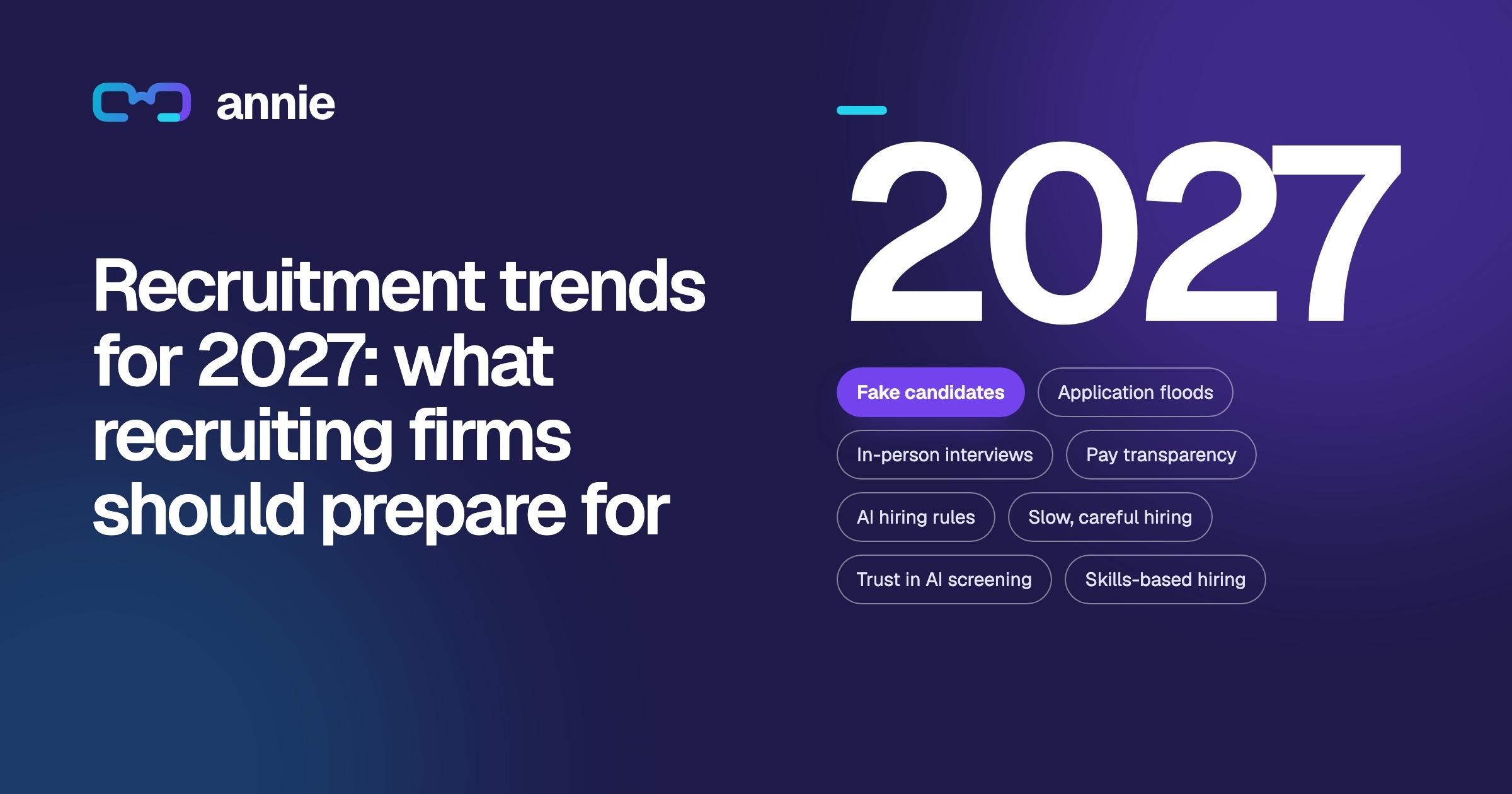
- Job ads are getting buried. LinkedIn was seeing about 11,000 applications a minute in 2025, so the best candidates increasingly come from your own network and direct approach
- Fake candidates are now a recruiter's problem. Gartner expects one in four candidate profiles worldwide to be fake by 2028, which means checking identity becomes part of the job
- In-person interviews are coming back, partly to stop AI-assisted cheating. Google and McKinsey have both added them
- Candidates don't trust AI to judge them fairly, which makes a real person on the other end a selling point
- Hiring is likely to stay slow and careful. People aren't moving much, and growth forecasts for 2027 are modest
- Pay transparency and AI hiring rules are arriving, especially in Europe. Stop asking candidates about pay history and know what your tools do
- Skills-based hiring gets lots of attention but has changed very few hires so far
Job ads are drowning in applications
AI tools have made applying for jobs almost effortless. In June 2025, LinkedIn data reported by The New York Times showed about 11,000 applications being submitted on the platform every minute, up 45% on the year before. Many of those CVs were written or tailored by AI, so they look polished and read the same.
What it means for recruitment firms: posting a job and waiting is getting worse, not better. You'll spend more time sorting and get less signal from each CV. The candidates clients pay a fee for are rarely the ones applying to 200 jobs a week.
What I'd do: lean harder on direct approach and your own network. Use ads to show you're active in a market, not as your main source. When you do advertise, ask one or two specific screening questions that a generic AI-written application can't answer well.
Fake candidates become your problem
Gartner predicts that by 2028, one in four candidate profiles worldwide will be fake. In its own survey of 3,000 job candidates, 6% admitted to taking part in interview fraud, either posing as someone else or having someone pose as them (Gartner, July 2025 (opens in a new tab)).
What it means for recruitment firms: when a recruiter puts someone forward, the client assumes they're real and who they say they are. If a fake candidate gets through your firm, it's your reputation on the line with that client and everyone they talk to.
What I'd do: make identity checks a standard step for every consultant, not something each person decides. Interview on video with cameras on, check ID before you submit, confirm employment history, and take references by phone using numbers you've found yourself rather than ones the candidate gave you. For remote roles especially, meet your finalists in person if you can.
In-person interviews are coming back
Partly because of AI-assisted cheating, some large employers are putting face-to-face interviews back into their process. In June 2025, Google's CEO Sundar Pichai said the company was reintroducing at least one round of in-person interviews. The Wall Street Journal reported that McKinsey had already started asking hiring managers to meet candidates in person at least once before making an offer. Candidates don't seem to mind: in the same Gartner research, 62% said they were more likely to apply for a job that included in-person interviews.
What it means for recruitment firms: processes may get a step longer, and candidates who've only ever interviewed remotely may need more preparation.
What I'd do: ask clients early whether there will be an in-person stage, and build it into your timeline. Prepare candidates for it properly. If you can meet your shortlisted candidates face to face yourself, it becomes something you can offer that a job board can't.
Candidates don't trust AI to judge them
Only 26% of job candidates trust AI to evaluate them fairly, according to Gartner's 2025 research, even though many of them use AI to apply. Half believe AI is already screening their applications.
What it means for recruitment firms: this works in your favour. The more hiring feels automated, the more a real person who reads the CV, calls back and gives honest feedback stands out.
What I'd do: say it out loud. Tell candidates that a person reads every CV you receive and that they'll hear back either way, then make sure that's true. Use AI for your admin, not for judging people. I went through which tools are worth it in AI in recruitment: what's worth using if you run a small desk.
Hiring stays slow and careful
In the US, the labour market has settled into what economists call “low hire, low fire”. The Federal Reserve Bank of Richmond noted that the hiring rate in July 2026 was 3.2%, below its long-run average, while the layoff rate of 1.0% was close to the lowest on record (Richmond Fed, September 2026 (opens in a new tab)). People are holding on to their jobs, and companies are holding on to their people. Staffing Industry Analysts expects the US staffing market to grow 2.2% in 2027, which is steady but not a boom.
What it means for recruitment firms: fewer people are actively looking, so good candidates need a real reason to move. Clients are hiring, but carefully, and they'll take longer to decide.
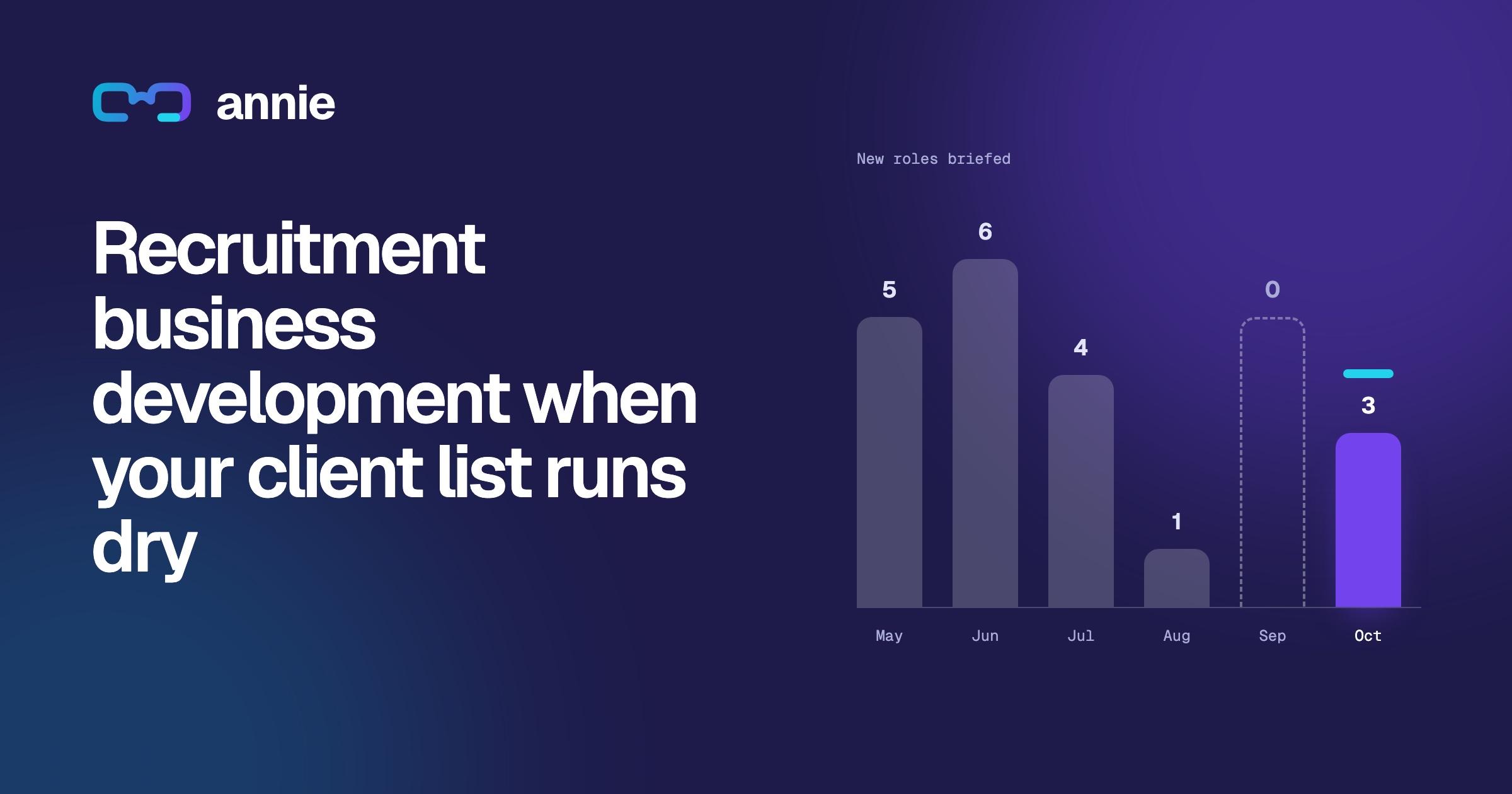
What I'd do: plan for 2027 to look a lot like 2026 rather than waiting for a rebound. Keep every consultant doing business development every week, not only the ones with quiet desks, and when you approach candidates, lead with what's different about the role rather than the salary alone. If your client list is already thin, I wrote about where new business comes from in Recruitment business development when your client list runs dry.
Pay transparency reaches the first conversation
The EU Pay Transparency Directive was due to become law across member states by 7 June 2026. Most missed that date. Italy, Slovakia, Lithuania and Malta made the deadline, and the Netherlands, Sweden, the Czech Republic and Denmark have set 1 January 2027 instead, with others still to follow. Its duties start at the recruitment stage: more openness about pay for candidates, and a ban on asking candidates about their pay history.
Outside the EU, salary ranges in job ads are becoming normal too, through law in some places and through candidate expectations everywhere else.
What it means for recruitment firms: “What are you on now?” is becoming a question you can't ask in some markets and shouldn't need in most.
What I'd do: get a pay range from your client before you start a search, not at offer stage. Ask candidates what they're looking for rather than what they earn. Check the rules in each country you place people in, because the EU directive is being brought in country by country, each with its own details.
Rules on AI in hiring start to bite
The EU AI Act treats AI used to recruit or select people as high-risk. After a delay agreed in 2026, those obligations now apply from 2 December 2027. Other places are bringing in their own rules, and regulators are already auditing recruitment tools.
What it means for recruitment firms: if any of your tools screen, rank or reject candidates, you'll need to know how they work and be able to explain their decisions.
What I'd do: keep a person on every decision about a person. List every tool your team uses with candidate data, and ask each provider how it handles that data and whether it's been tested for bias. If a tool can't answer, don't use it on candidates.
Skills-based hiring: more talk than change
Skills-based hiring has been on every trend list for years. The evidence says it hasn't changed much yet. A 2024 study by Harvard Business School and the Burning Glass Institute found that when large companies removed degree requirements, it made a meaningful difference to fewer than 1 in 700 hires.
What it means for recruitment firms: don't rebuild your process around a headline. Most clients, especially for senior roles, still hire on track record and evidence.
What I'd do: when a client says they're open to non-traditional backgrounds, test it with one strong candidate before you rely on it. And when you present anyone, lead with what they've done and can prove, not just where they studied or worked.
Your 2027 checklist
If you only do a few things before January, I'd do these:
- Make an identity check a standard step before any candidate is submitted, for every consultant.
- Get salary ranges from clients at briefing, and stop asking candidates about current pay.
- Find out from each client whether they've added an in-person interview stage.
- List every tool your firm uses with candidate data and what each one does with it.
- Move more of your sourcing to direct approach and your firm's own network.
- Put business development in every consultant's diary every week of the year, not only when it's quiet.
- Make sure every candidate who talks to you hears back from a person.
None of these is complicated. Most of them are what good recruiters already do. In 2027 they'll simply matter more.
Where Annie fits
Most of the trends above push the same way: fewer people moving, more noise in the inbox, and more value in knowing your market and your network well. That's the part of the job I built Annie for.
Every morning she sends a short list of people worth calling, with the reason for each name and the source behind it: a new appointment, a funding round, a role posted, a contact who changed jobs or a client who's gone quiet. Contacts, candidates, jobs, your BD pipeline and invoices sit in one place. Drafts open in your own Gmail or Outlook, nothing goes out until you press send, and she doesn't screen or reject candidates. The decisions stay with you.
Solo is $129 a month with everything included and no contract, and there's a Teams plan for firms. See pricing.
If you're planning 2027 for your desk or your firm, try it on your own network for 10 days, no credit card needed. Or book a call with me and we can talk through your plans for the year.
Questions
What are the current trends in recruitment?
The main recruitment trends heading into 2027 are a flood of AI-written applications, a rise in fake candidates, the return of in-person interviews, low candidate trust in AI screening, slow and careful hiring, pay transparency laws, new rules on AI in hiring, and a slower shift to skills-based hiring than the headlines suggest.
What are the biggest recruitment trends for 2027?
For recruiters, the biggest changes in 2027 are candidate fraud and identity checks, pay transparency starting to apply in more EU countries from 1 January 2027, EU AI Act obligations for recruitment AI from 2 December 2027, and a market where fewer people are moving jobs. Each one changes how recruiters source, screen and present candidates.
How is AI changing recruitment?
AI has made it easy for candidates to send polished applications in bulk and for recruiters to automate admin. It has also created new problems, including fake candidates and interview cheating, and only about a quarter of candidates trust AI to evaluate them fairly. Recruiters who use AI for admin and keep people in charge of decisions are best placed.
Will recruiters be replaced by AI?
Not the ones who win their own clients and know their market. AI can draft, sort and remind, but clients still pay recruiters for judgement, access to people who aren't applying, and honest advice. The trends for 2027 make those things more valuable, not less.
Is the recruitment market going to improve in 2027?
Forecasts point to steady, modest growth rather than a sharp recovery. Staffing Industry Analysts expects the US staffing market to grow 2.2% in 2027, and US hiring and layoff rates have both been running below their long-run averages. Recruiters should plan for a careful market and keep business development consistent.
What is skills-based hiring?
Skills-based hiring means choosing candidates based on what they can do rather than formal qualifications such as degrees. Many employers say they've adopted it, but a 2024 Harvard Business School and Burning Glass Institute study found it changed fewer than 1 in 700 hires at large companies.

Michael Stubbs has spent more than 15 years in recruitment, ten of them helping build one of the largest boutique search firms in its market. He now runs his own desk and is the founder of Annie, the recruitment CRM that tells you who to call. He is also the founder of Vantage Search Group, a research-led executive search firm.