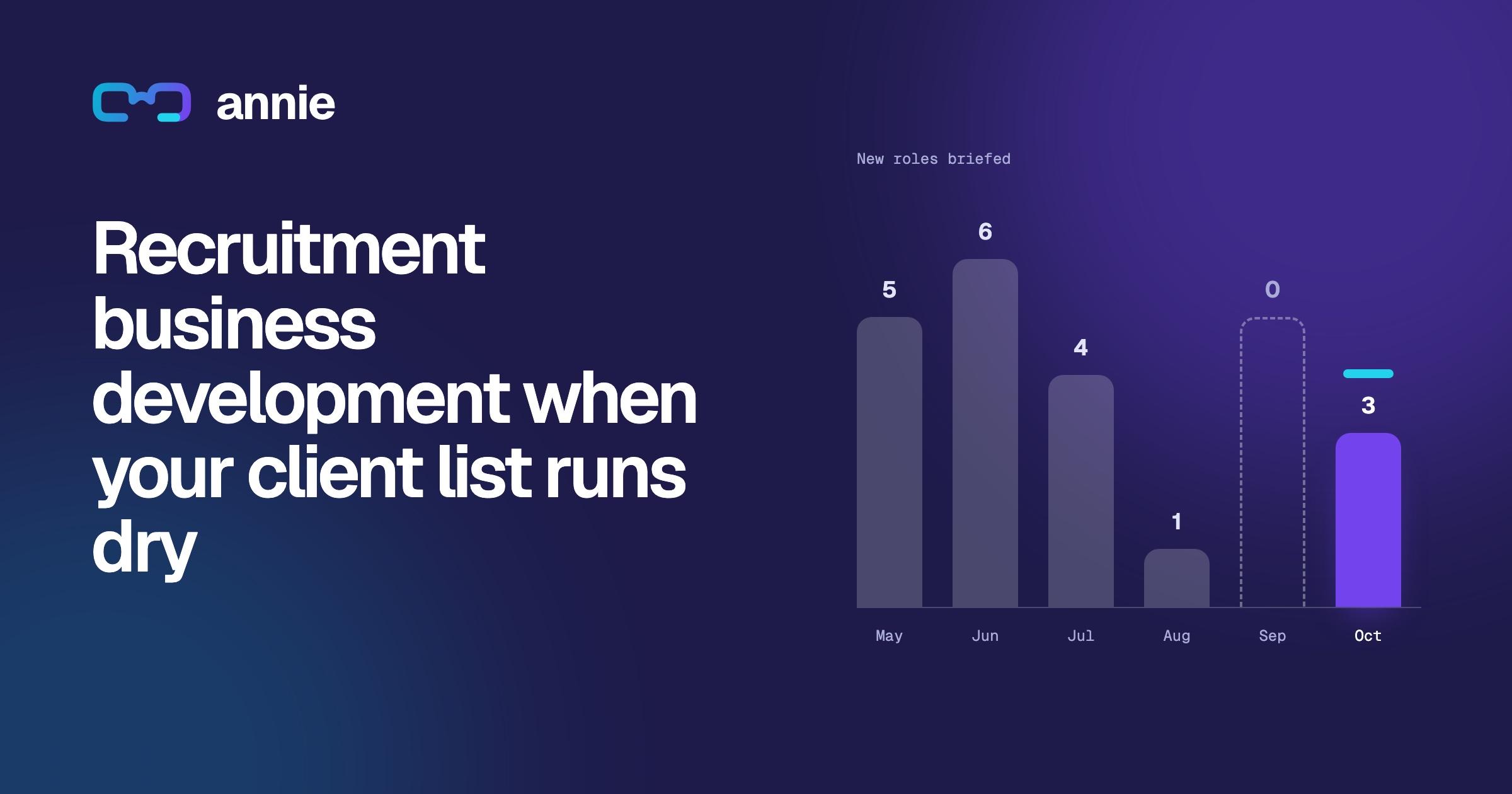
If you're reading this, your pipeline is probably thinner than you'd like. It happens to every recruiter at some point, usually after a busy stretch of filling roles.
I've been in recruitment for more than 15 years, ten of them helping build one of the largest boutique search firms in its market, and I now run my own desk. Most of the time, a quiet pipeline happens because business development stopped while you were busy delivering.
This post covers where to find new clients when that happens, starting with the people you already know, and how to build a routine so it doesn't happen again.
- Client lists usually run dry for one reason: business development stopped while you were busy filling roles
- The fastest new business is in your own network: past clients, candidates you placed who now hire, contacts who changed jobs, and proposals that went quiet
- Call with a reason. A new appointment, a funding round, an expansion or a role posted gives you something to say that isn't "just checking in"
- Plan for silence. Busy people rarely reply to the first message, so decide your next steps before you send it
- Do BD every day, first thing, before email. A small daily habit beats a frantic week once a quarter
- Track it. If you can't see who you called, who owes you a reply and where your last three clients came from, you're guessing
Why your client list runs dry
Before you fix it, it helps to know which of these got you here. Usually it's more than one.
- You stopped doing BD while you were delivering. Filling roles feels like work. Calling people who haven't asked for anything feels optional. So it slips, and six weeks later you feel it.
- Too much of your billing came from one or two clients. When one of them freezes hiring, half your business goes with it.
- Your contacts moved. The hiring manager who loved you left in March, and the person in their seat has never heard of you.
- Your market slowed. Sometimes it isn't you. A sector cuts hiring and every recruiter in it feels the same quiet.
Start with the people who already know you
When the list runs dry, most recruiters reach for cold outreach to strangers. I'd start somewhere warmer. The quickest new business usually comes from people who already know your work.
Past clients who went quiet: Anyone who hired through you in the last two years and hasn't heard from you since. They're not lost. You just stopped calling.
Candidates you placed who now hire: Today's candidate is next year's hiring manager. The person you placed as a team lead three years ago may run a department now, and they already trust you.
Contacts who changed jobs: This is two opportunities, not one. Their new company may need help building a team, and the company they left now has an empty seat and a new person in charge of it.
Proposals and terms that went quiet: Terms you sent and never got back. A client who said “come back to me in the new year”. Conversations you started and never finished are the closest thing you have to new business.
Promises you made: “I'll send you some profiles next week” counts. If you said it and didn't do it, now is the time.
Go through your inbox, your CRM and your LinkedIn connections, and make one list. That list is your first fortnight of calls.
Where new recruitment clients come from
Once you've worked through your warm list, you need fresh names. Here's where I'd look, in order.
Hiring signals
The best reason to call a company is that something just changed there. Look for:
- New senior appointments. A new leader often rebuilds their team in the first few months.
- Funding rounds. New money usually means new hires.
- Expansion news. A new office, a new market, a new product line.
- Roles on their careers page. Especially roles that have been open a while, or several of the same kind at once.
A signal gives you a reason to call that isn't about you. It's about them, which is why it works.
Referrals
Ask the clients who like you who else they know. The best time is straight after a successful placement, when they're happiest with you. Be specific: “Who else do you know who's building a finance team this year?” gets a better answer than “Do you know anyone who's hiring?”
Your best candidates
A strong candidate is a reason to call a client. Before you put anyone forward, get their permission and keep identifying details out until the client is interested. A short, anonymised profile of someone good, sent to a company that hires people like them, opens doors that a sales pitch won't.
Being known for something
In a niche, people should think of you when a role comes up. Posting useful things on LinkedIn about your market, salaries you're seeing and who's hiring builds that over time. It won't fill your pipeline this month, but it makes every call you make easier.
If you're still setting up your own desk, I covered how to find your first clients in How to start a recruitment agency.
Does cold calling still work in recruitment?
Yes, when you have a reason to call. A call that opens with “I'm a recruiter, do you have any vacancies?” gets the reaction it deserves. A call that opens with something relevant to them gets a conversation.
A simple structure:
- The reason. “I saw you've just opened an office in Riyadh.”
- Why you. “I place senior sales people in the region, and I've worked with two companies in your space this year.”
- The ask. “Would 15 minutes next week be useful to talk about how you're building the team?”
Keep it short. Ask for a meeting, not a job. And call the person who owns the hire, not a general HR inbox, unless HR runs the process.
Outreach that gets a reply
Email and LinkedIn messages work best when they follow the same rule as a good call: one fact, one ask.
Hi Tarik, congratulations on the new role. When the team starts hiring, I place senior strategy people across the GCC. Worth 15 minutes next week?
No paragraph about your agency. No list of sectors. No “I hope this email finds you well”.
Plan for silence
Busy people rarely reply to the first message, so decide your follow-ups before you send it. Something like:
- Day 4: a short nudge in the same thread, with one new piece of information.
- Day 10: a different angle, such as a candidate, a salary insight or a market change.
- Day 17: a last, polite note that leaves the door open.
If there's still nothing, try someone else at the same company, ideally with an introduction from someone you both know. Then put a reminder in for a few months' time and move on without taking it personally.
A daily BD routine for a solo recruiter
The recruiters I know who never run dry do the same thing: a little BD every day, not a lot of it once a quarter.
Every morning, before email. Spend your first hour on business development. Once you open your inbox, the day belongs to other people.
Set a number and track it. Pick a number of BD conversations you'll have every day and keep to it, even in a busy week. The right number depends on your market and your desk. Consistency matters more than size.
Every week. Look at your pipeline: who's waiting on terms, who owes you a reply, which proposals have gone quiet. Chase them.
Every month. Look at where your last few clients came from. Do more of what worked. Stop doing what didn't.
If your BD lives in a spreadsheet, this is where it gets hard. A spreadsheet doesn't remind you of anything. I wrote about when it's time to move on in Do solo recruiters need a CRM, or will a spreadsheet do?
Building a recruitment BD strategy
A strategy sounds grand. For a small desk, it comes down to three decisions.
- Who you serve. One niche, described in one sentence. “Senior finance hires for mid-sized logistics companies” is a strategy. “All sectors” isn't.
- Who you're going after. A list of target companies small enough that you can know what's happening at each one. Watch them. Know who works there. Call when something changes.
- How you'll stay in touch. A rhythm for past clients, active clients and targets, so nobody you care about goes six months without hearing from you.
Write it on one page. If it needs a deck, it's too complicated for a desk of one.
Mistakes that keep the list empty
- Stopping BD when you're busy. Worth saying twice. It's the main cause of the quiet month.
- Mass messaging. A hundred identical InMails get you fewer meetings than ten good calls.
- Leading with a discount. A client won on price will leave on price.
- Talking to the wrong person. Find the person who owns the hire and has the budget.
- Giving up after one try. Silence usually means busy, not no.
- Not writing it down. If you can't see who you spoke to last week and what you promised them, you'll drop things. On your own, nobody else will catch them.
Where Annie fits
Everything in this post depends on remembering things: who went quiet, who moved jobs, which company just raised money, what you promised to send on Friday. I built Annie because that's the part I kept dropping when I was busy.
Every morning she sends a ranked list of people worth calling today, with the reason for each name and the source behind it: a new appointment, a funding round, a role posted, a reply you owe or a client who's gone quiet. She watches the companies where you already know someone, spots job moves when you upload a fresh LinkedIn export, and suggests a follow-up plan so silence still has a next step. Drafts open in your own Gmail or Outlook, and nothing goes out until you press send.
Setup takes about 15 minutes with your LinkedIn export and your inbox. Solo is $129 a month with everything included and no contract. See pricing.
If your list has run dry, try it on your own network for 10 days, no credit card needed. Or book a call with me and I'll show you who Annie would have put at the top of your list this morning.
Questions
What is business development in recruitment?
Business development in recruitment is the work of winning new clients and new roles: researching companies, calling and emailing hiring managers, following up on proposals, and keeping in touch with past clients. For a solo or boutique recruiter, it runs alongside filling roles rather than being someone else's job.
How do recruitment agencies get clients?
Most recruitment agencies get clients through their existing network, referrals from happy clients, calls prompted by hiring signals such as new appointments or funding, sending strong candidate profiles to relevant companies, and building a reputation in a niche. Warm relationships usually convert faster than cold outreach.
How do I find clients for my recruitment agency?
Start with people who already know your work: past clients, candidates you placed who now hire, and contacts who changed jobs. Then build a short list of target companies in your niche and watch them for reasons to call, such as new senior hires, funding rounds, expansion news and open roles.
Does cold calling still work in recruitment?
Cold calling still works in recruitment when the call has a clear, relevant reason, such as a new office, a new leader or a role that's been open for a while. Keep it short, call the person who owns the hire, and ask for a 15-minute conversation rather than a vacancy.
How many business development calls should a recruiter make a day?
There's no single right number. It depends on your market, your seniority and how warm your list is. Pick a daily number you can keep to even in a busy week, track it, and adjust once you can see how many calls it takes to win a role.
How do I get clients for a staffing agency?
The same way as a recruitment agency: work your existing network first, watch target companies for hiring signals, ask satisfied clients for referrals and follow up consistently. Staffing clients that hire contractors often need people quickly, so being reachable and fast matters.
How do I win back a client who's gone quiet?
Call with a reason, not a catch-up. Mention something that's changed at their company, a candidate they'd want to know about or a shift in their market. Ask what they're working on this year, and don't pitch until you know.
Michael Stubbs has spent more than 15 years in recruitment, ten of them helping build one of the largest boutique search firms in its market. He now runs his own desk and is the founder of Annie, the recruitment CRM that tells you who to call. He is also the founder of Vantage Search Group, a research-led executive search firm.